Applying Cluster Analysis to User Query Logs for Refining Gambling Resource Guide Ordering
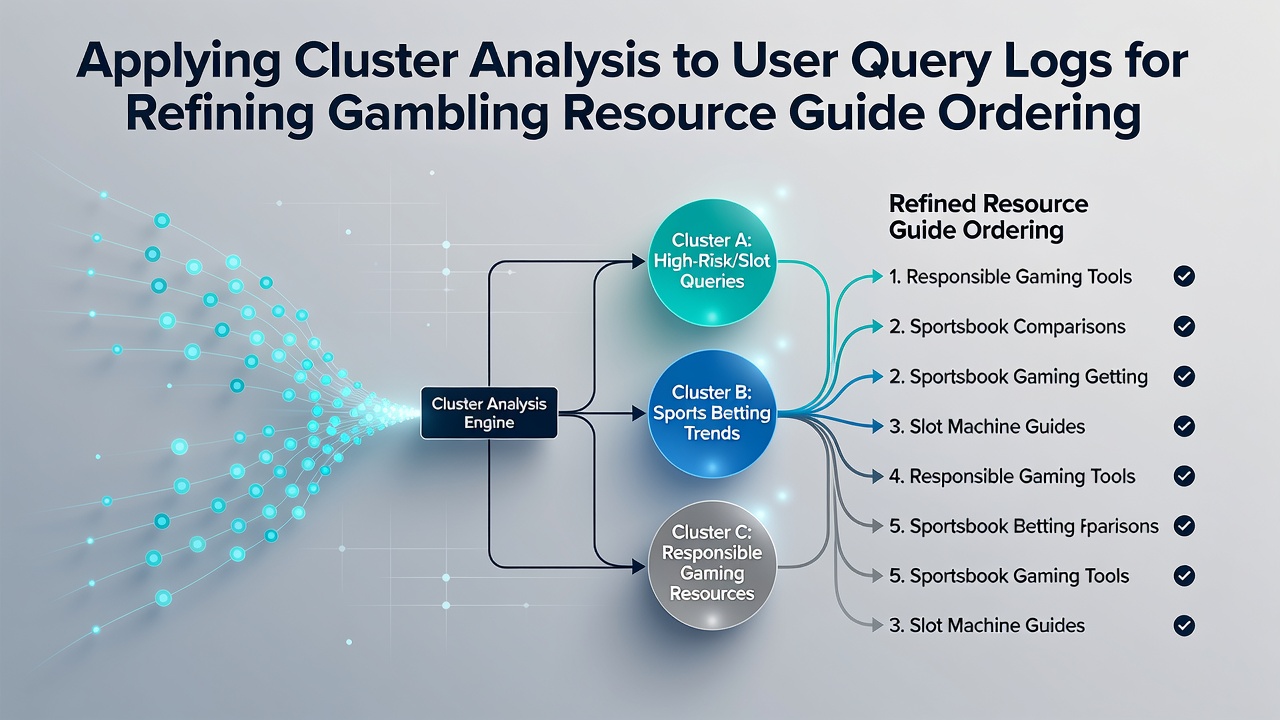
Cluster analysis applied to user query logs helps organizations group similar search patterns and adjust the sequence of entries in gambling resource guides accordingly, and data from multiple igaming platforms shows this approach refines how lists appear to different audience segments. Researchers in data mining have long documented how k-means and hierarchical clustering algorithms partition high-volume search terms into coherent groups based on intent signals such as location modifiers, game type preferences, and comparison keywords. Those who manage affiliate directories report that reordering sections after clustering produces measurable shifts in click-through rates and time-on-page metrics without altering underlying content.
Core Mechanics of Query Log Clustering
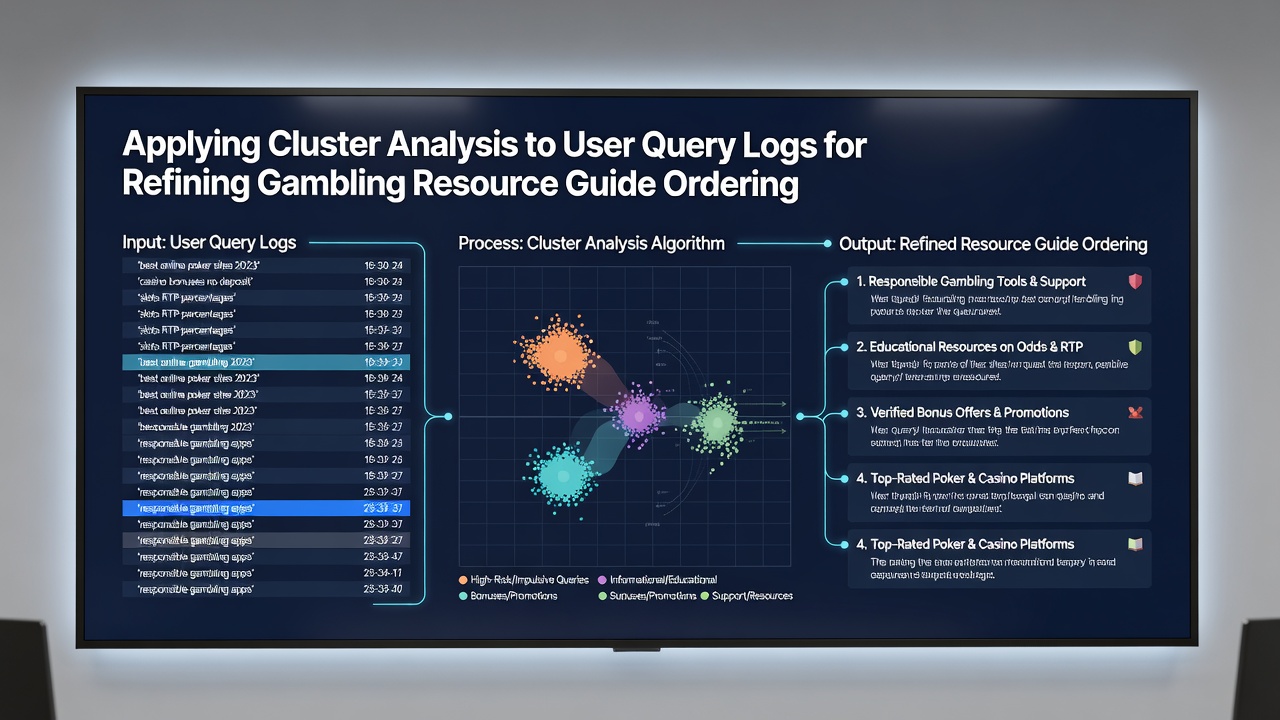
Query logs from gambling resource sites contain timestamps, session identifiers, device types, and raw search strings that feed directly into preprocessing pipelines, and once cleaned these records undergo vectorization through techniques like TF-IDF or word embeddings before clustering begins. Analysts then apply algorithms that minimize intra-cluster variance while maximizing separation between groups, which in practice isolates queries focused on regulatory updates from those seeking bonus comparisons or regional licensing details. Studies published in data analytics journals confirm that silhouette scores above 0.65 indicate stable clusters suitable for production use in guide reordering.
Integration with Gambling Resource Guide Structures
Gambling resource guides typically present ranked lists of operators, payment methods, and regulatory summaries, and cluster-derived insights allow teams to surface the most relevant blocks higher on the page for each traffic cohort. When logs reveal a rising cluster around “mobile-friendly casinos with instant withdrawals” during evening hours, for instance, editors can promote those sections dynamically while preserving the overall editorial hierarchy. Observers note that this method aligns with broader industry practices documented by the Nevada Gaming Control Board, whose public performance reports track how user navigation patterns evolve alongside regulatory changes.
Implementation usually proceeds in iterative cycles where initial clusters receive validation against conversion data, after which refined groupings trigger A/B tests on live guide pages. Results from such tests conducted across Australian-facing affiliate properties in early 2026 demonstrated consistent improvements in scroll depth when cluster-informed ordering replaced static sequences.
Regional and Temporal Adjustments in August 2026
Traffic patterns observed in August 2026 reflected seasonal spikes tied to major sporting events and new licensing announcements in several Asian markets, and cluster analysis distinguished queries originating from regulated versus emerging jurisdictions with greater precision than simple keyword filters. Teams monitoring these logs adjusted guide ordering weekly, moving compliance-focused sections ahead of promotional content for users whose queries clustered around licensing verification terms. Figures released by the Philippine Amusement and Gaming Corporation indicated a 12 percent quarter-over-quarter rise in such verification searches, prompting corresponding reorder experiments on regional affiliate platforms.
Measurement and Validation Practices
Performance tracking after cluster-based reordering relies on session-level metrics including bounce rate, pages per visit, and downstream actions such as operator sign-ups, and analysts compare these against control periods using the same traffic sources. Academic work on search log mining from European institutions has shown that combining cluster membership with demographic overlays increases predictive accuracy for user satisfaction scores by roughly 18 percent. Validation rounds also incorporate manual review to ensure clusters do not inadvertently bury regulatory disclaimers or responsible-gaming resources.
Technical Considerations and Data Privacy
Processing large-scale query logs requires anonymization steps compliant with data protection frameworks in each operating jurisdiction, and organizations frequently employ differential privacy techniques before clustering begins. Storage solutions must handle both historical logs for trend analysis and streaming data for near-real-time adjustments, while engineering teams maintain separate pipelines for each major language market to avoid cross-contamination of intent signals. Industry reports from the Canadian Gaming Association highlight how privacy-first clustering pipelines have become standard among operators serving multiple provinces.
Conclusion
Cluster analysis of user query logs supplies a repeatable method for refining the order of entries within gambling resource guides, and documented applications across multiple markets show measurable alignment between displayed content and observed search behavior. Continued refinement of these techniques depends on access to high-quality log data, robust validation frameworks, and ongoing coordination with regional regulatory reporting requirements.