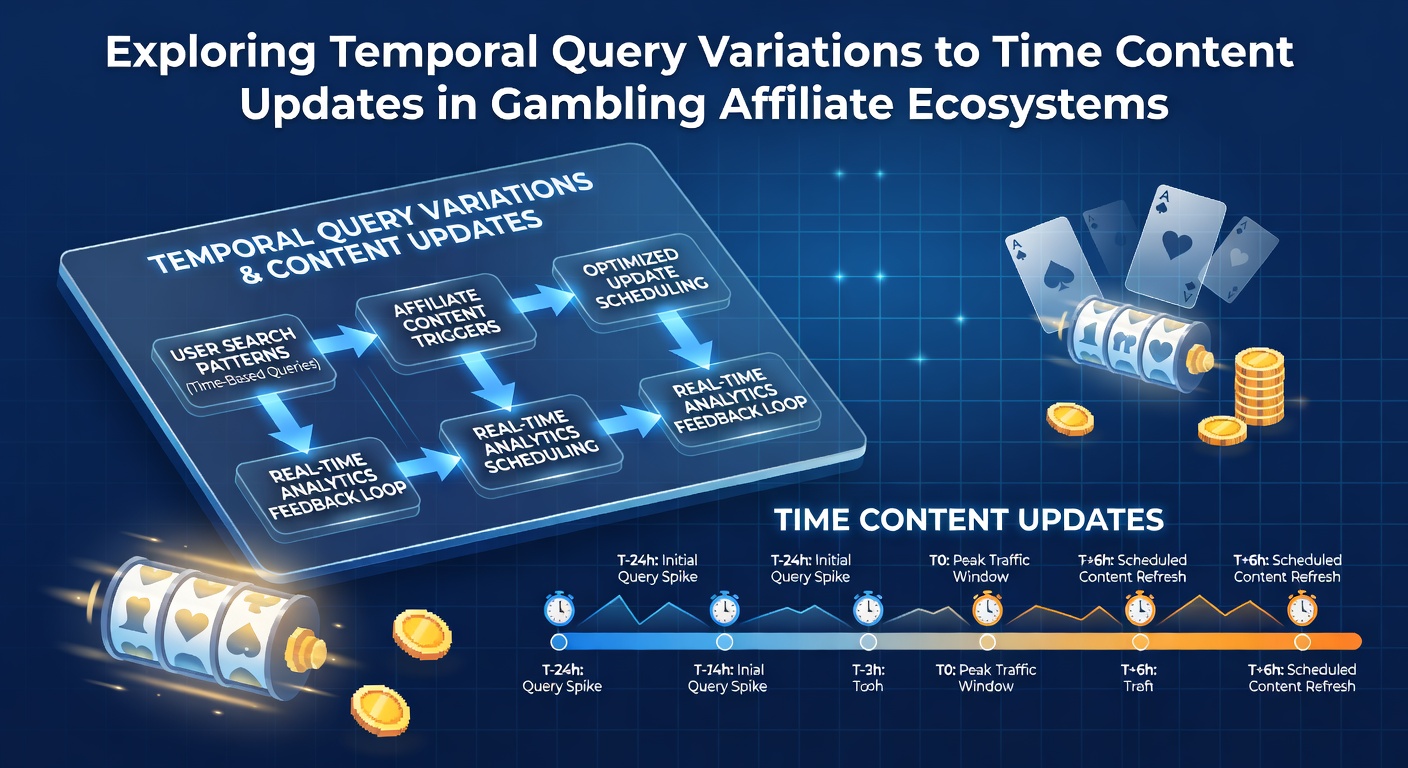
Exploring Temporal Query Variations to Time Content Updates in Gambling Affiliate Ecosystems
Search patterns in the gambling affiliate space shift with seasons, regulatory announcements, and major events, which creates windows where content timing determines visibility. Observers note that queries like "best online casinos May 2026" spike during specific periods while broader terms such as "casino bonuses" maintain steadier but lower volume throughout the year. Those who track these temporal variations find that aligning updates with query peaks improves indexing speed and ranking stability across affiliate platforms.
Patterns in Query Timing Across Regions
Data from multiple markets shows distinct cycles tied to fiscal calendars and sporting calendars. In North American jurisdictions, interest in state-specific licensing details rises sharply after legislative sessions conclude, whereas European searches often cluster around summer tournament schedules. Researchers at institutions tracking digital behavior have documented how queries incorporating future dates, such as "2026 casino rankings," gain traction three to four months ahead of the referenced year, prompting affiliates to refresh pages proactively rather than reactively.
Australian regulatory releases from bodies like the Northern Territory Racing Commission have historically triggered localized query surges within days of publication, and similar patterns appear in Canadian provincial updates. Affiliates monitoring these releases adjust content schedules to match the resulting search behavior, which tends to favor pages that incorporate the newest compliance details first.
Methods for Detecting Query Shifts
Tools that aggregate historical search data reveal recurring clusters around holidays, tax deadlines, and sports finals. One study from an academic group examining European markets found that temporal signals emerge most clearly when analysts compare weekly trends against baseline monthly averages, allowing identification of early upticks before they reach peak volume. Affiliates apply this approach by segmenting queries into categories such as event-driven, seasonal, and regulatory, then mapping each category to predicted update intervals.
Practical implementation involves setting review cycles that coincide with these mapped intervals. For instance, pages covering live dealer options receive attention in advance of major e-sports events, while bonus comparison tables align with post-holiday spending periods. The process relies on continuous data feeds rather than static calendars, since external factors like new operator entries can accelerate or delay expected shifts.
Integration with Content Refresh Protocols
Timing updates requires coordination between keyword monitoring and content production pipelines. Teams segment articles into core sections that remain stable and variable sections that accommodate date-specific or regulatory details. This modular structure permits targeted revisions without full rewrites, which reduces resource demands while maintaining freshness signals that search systems reward.

According to reports issued by the American Gaming Association, market expansion in certain U.S. states during 2025 and into 2026 generated measurable query growth around newly legalized verticals. Affiliates that scheduled updates within two weeks of legalization announcements captured higher click-through rates than those operating on quarterly refresh cycles. Similar observations appear in analyses from Singapore's Casino Regulatory Authority, where announcements about operational changes prompted immediate query reorientation among regional users.
Examples from Affiliate Operations
One documented case involved a platform that tracked rising interest in "responsible gambling tools 2026" following industry roundtables held in early spring. By publishing updated resource lists in late April, the site aligned with the subsequent query surge that extended through May. Another example comes from operators covering Macau developments, where personnel changes at economic ministries produced short-term spikes in informational queries that faded once coverage stabilized.
These instances illustrate how combining query analytics with external event calendars produces more precise update schedules. Affiliates maintain internal logs that correlate past query movements with content deployment dates, creating feedback loops that refine future timing decisions.
Conclusion
Temporal query analysis provides a framework for scheduling content updates that matches observed search behavior across gambling affiliate ecosystems. Organizations that map regional patterns, integrate modular content structures, and reference regulatory timelines position their pages for improved alignment with user intent. Continued monitoring of data sources from varied jurisdictions supports ongoing adjustment of these timing strategies as markets evolve.