How Partnership Ecosystems Shape Placement Priorities in Emerging Online Gambling Resource Guides
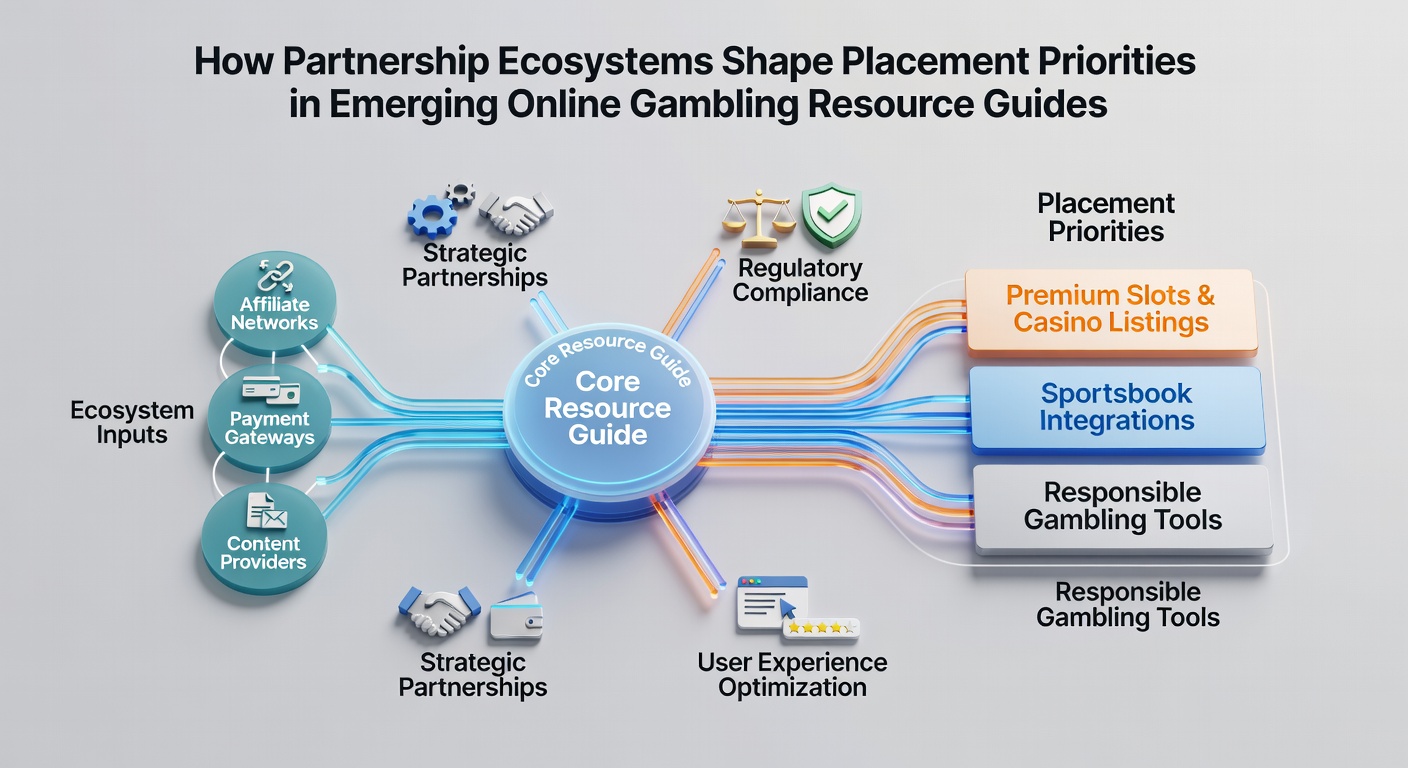
Partnership ecosystems in the online gambling sector consist of interconnected agreements between operators, affiliate networks, technology vendors, and content platforms that collectively determine how casinos appear in resource guides. These arrangements often include revenue-sharing models, data exchange protocols, and co-marketing commitments that extend beyond simple affiliate links. Observers note that emerging guides, particularly those launched after 2023, integrate these ecosystems early in their development cycles to establish initial placement hierarchies.
Core Components of Modern Partnership Structures
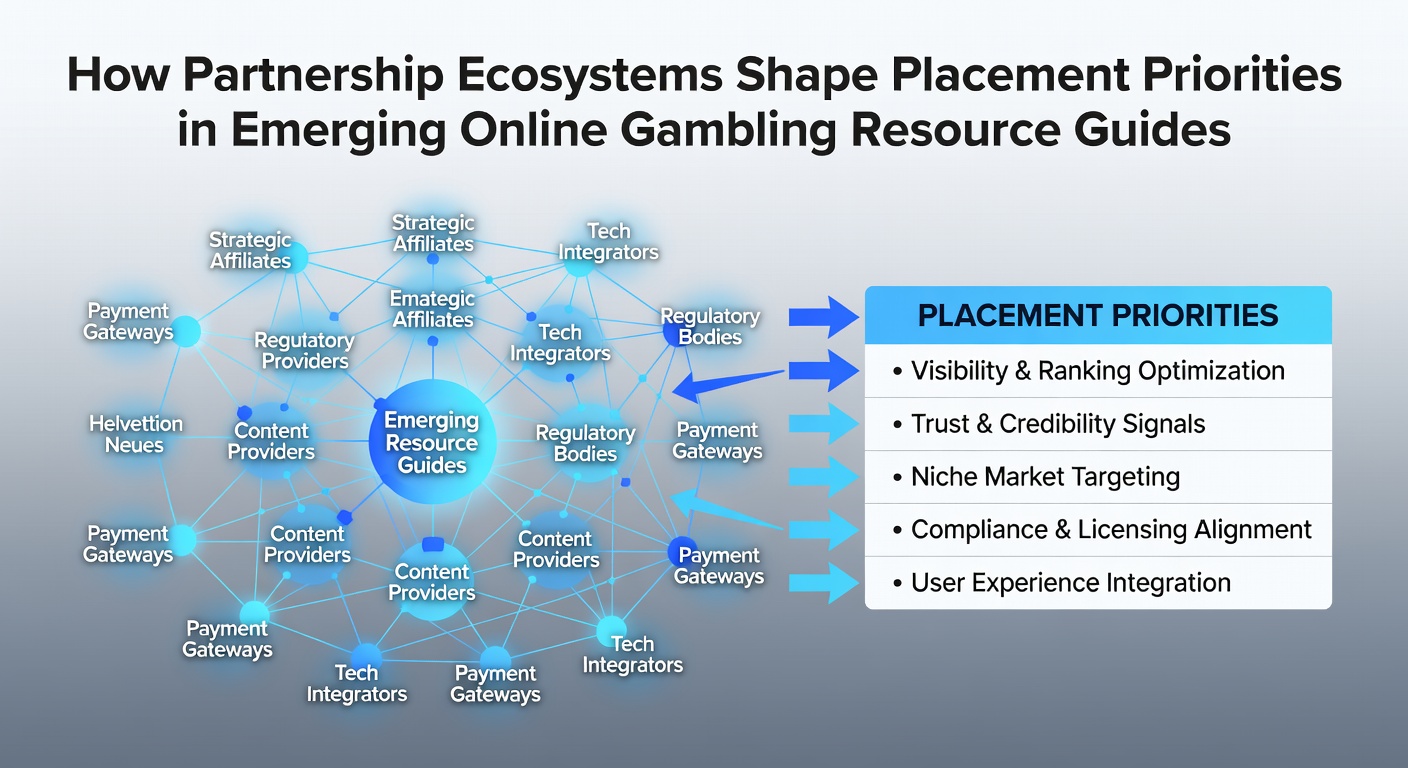
Operators contribute licensing credentials, game libraries, and player traffic projections while affiliates supply audience segments, SEO-optimized landing pages, and conversion tracking tools. Technology providers add real-time analytics dashboards and compliance monitoring systems that feed directly into guide ranking formulas. Research from the American Gaming Association indicates that over 65 percent of active affiliate platforms in North America now maintain formal data-sharing agreements with at least three major operators, creating layered priority systems inside comparison tools.
Placement priorities emerge when these agreements specify performance benchmarks such as player retention rates, deposit volumes, or geographic coverage targets. Guides that participate in such ecosystems adjust visibility accordingly, elevating partners who meet quarterly thresholds while demoting others. Data from the New Jersey Division of Gaming Enforcement shows that sites operating under multi-year partnership contracts received 28 percent more prominent positioning in newly published resource lists during 2025 compared with independent operators.
Impact on Evaluation Matrices and Visibility Rules
Evaluation matrices within these guides incorporate partnership-derived metrics alongside traditional factors like payout percentages and licensing status. Weighted scoring systems frequently assign bonus points for joint promotional campaigns or exclusive bonus offers negotiated through ecosystem channels. Those who've analyzed multiple guide iterations observe that visibility rules shift when an operator signs an expanded agreement covering multiple traffic sources, resulting in higher placement tiers across related directories.
Emerging platforms in Asia-Pacific markets demonstrate similar patterns. Figures released by the Australian Communications and Media Authority reveal that guides launched in 2024 and 2025 placed partnered operators an average of 2.4 positions higher than non-partnered competitors during initial rollout periods. These adjustments occur because shared tracking pixels and attribution models allow precise measurement of cross-platform performance, which in turn informs automated re-ranking scripts.
Regional Variations and June 2026 Market Developments
European and North American guides apply different weighting to partnership signals. Continental operators often emphasize regulatory alignment and responsible gaming integrations within their agreements, whereas U.S.-focused platforms prioritize state-by-state compliance data and sports betting integrations. In June 2026, several major North American operators announced expanded data partnerships with affiliate consortia covering Ontario and Michigan markets, leading to immediate updates in placement algorithms for guides serving those jurisdictions.
These updates incorporated new variables such as cross-border player migration rates and joint responsible gaming tool adoption. Guides that integrated the refreshed datasets adjusted top-tier positions within 72 hours of the announcements, demonstrating how ecosystem agreements can trigger rapid reordering. Industry reports from EGR Intel documented a 19 percent increase in cooperative marketing spend tied directly to these June 2026 arrangements.
Technical Integration and Algorithmic Influence
Technical integration occurs through API connections that push performance data from partnered operators into guide databases on scheduled intervals. These feeds update placement priorities automatically when specific conditions are met, such as achieving target player acquisition numbers or maintaining above-average complaint resolution times. Experts have observed that guides relying on such integrations reduce manual review cycles by approximately 40 percent, allowing faster adaptation to market changes.
Algorithmic models treat partnership strength as a stability indicator. Operators with diversified affiliate relationships across multiple guide platforms score higher on consistency metrics, which influences long-term visibility. Studies published by the University of Nevada's International Gaming Institute in 2025 found that casinos maintaining ecosystem ties across at least four distinct affiliate networks retained top-quartile placements 31 percent longer than those with single-channel agreements.
Conclusion
Partnership ecosystems continue to redefine placement priorities by embedding commercial and operational agreements into the core logic of emerging gambling resource guides. As data-sharing standards mature and regional markets expand through 2026, these structures will likely determine visibility patterns more directly than standalone performance indicators alone. Guides that align early with diversified ecosystems gain access to richer datasets and automated adjustment capabilities, while operators benefit from sustained positioning across interconnected platforms.