Implementing A/B Testing Protocols for Optimizing Call-to-Action Buttons in iGaming Affiliate Articles
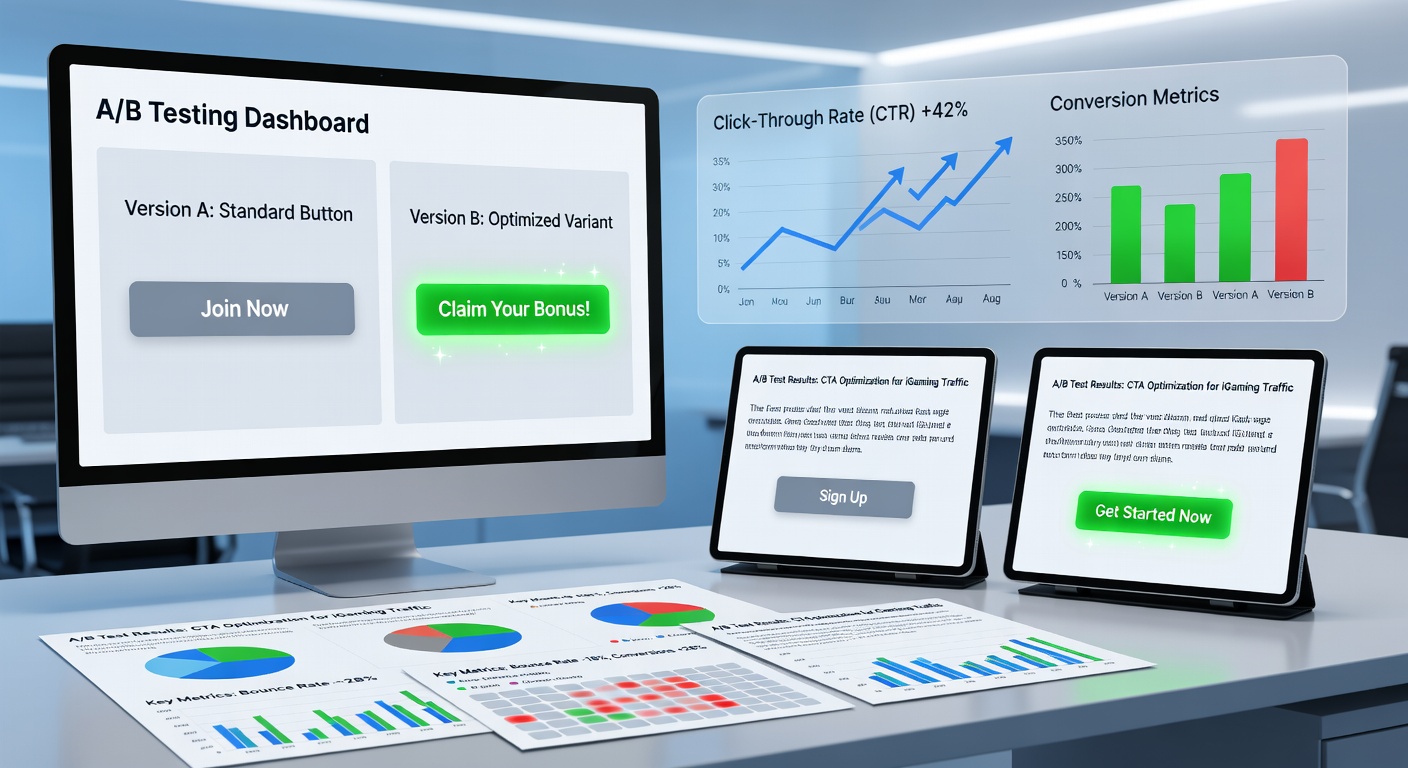
Call-to-action buttons in iGaming affiliate articles guide readers toward registration pages and promotional offers, and structured A/B testing protocols help teams refine these elements based on measurable user interactions. Observers note that affiliate sites in this sector often see higher engagement when button variations undergo controlled comparisons rather than relying on initial design assumptions, while data from digital marketing studies shows that even small changes in wording or color can shift click-through rates by measurable margins.
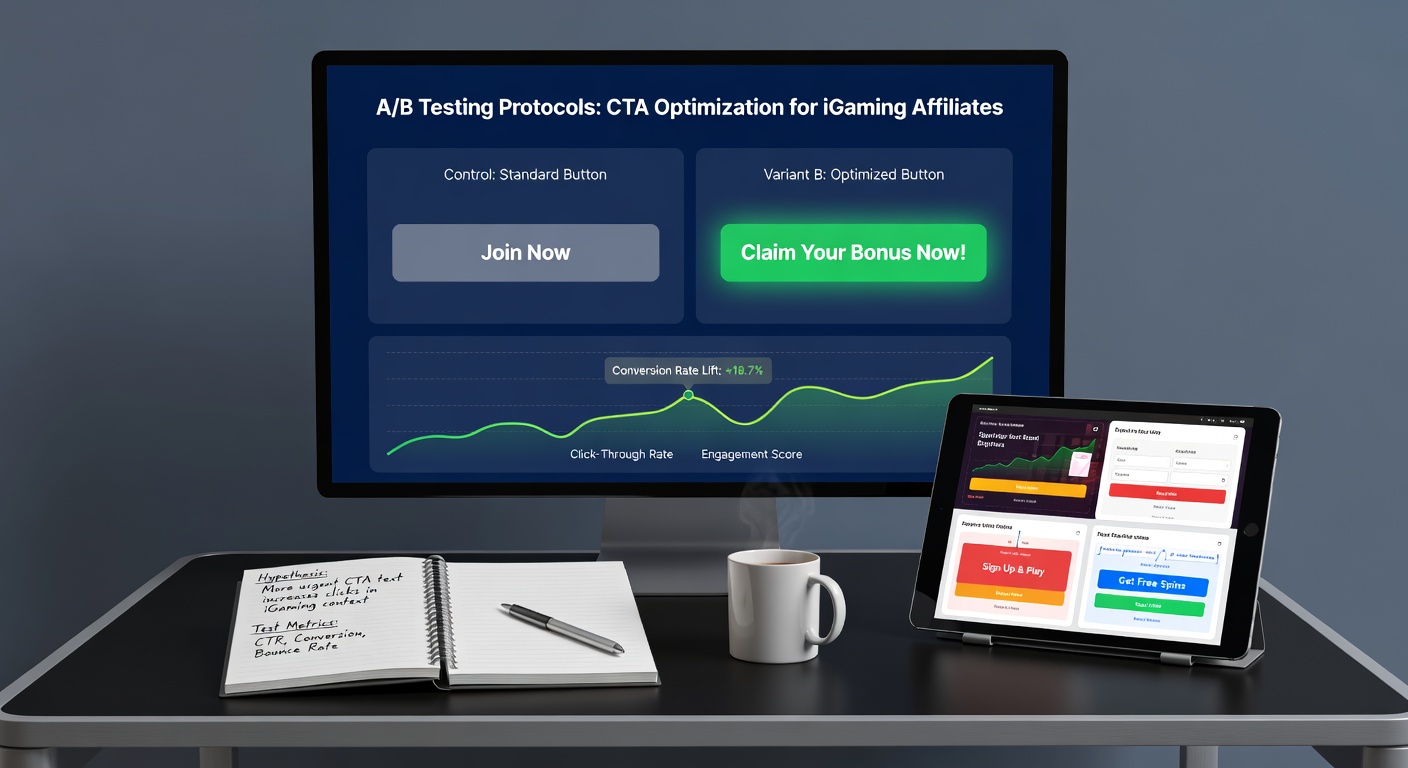
Researchers at institutions focused on user experience have documented how A/B testing works by splitting traffic between two versions of a page, each featuring a different CTA button configuration. One version might display a button labeled "Claim Bonus Now" in a vibrant green shade while the alternative uses "Get Started Today" in a neutral blue, and the system tracks which option generates more conversions such as account sign-ups or first deposits. This method relies on statistical significance thresholds, typically set at 95 percent confidence, to determine whether observed differences stem from the changes or from random variation.
Core Components of Effective Testing Protocols
Teams establish protocols by first defining clear hypotheses about what might improve performance, such as testing whether urgent language increases deposits compared to benefit-focused phrasing. Sample sizes get calculated in advance using tools that account for baseline conversion rates, expected lift, and traffic volume, because insufficient data can lead to inconclusive outcomes. Variables remain isolated during each test round so that only one element changes at a time, whether that involves button placement, size, or accompanying microcopy, while all other page factors stay consistent across variants.
Implementation often begins with traffic segmentation through server-side or client-side scripts that randomly assign visitors to control or treatment groups. Monitoring occurs in real time through analytics platforms that log clicks, scrolls, and subsequent actions like form completions, and tests continue until they reach predetermined sample thresholds rather than stopping early based on preliminary trends. Those who have run such experiments across multiple iGaming campaigns report that documenting every parameter beforehand prevents scope creep and makes replication straightforward in later cycles.
Metrics That Drive Decision Making
Primary metrics center on click-through rate and conversion rate to the target action, yet secondary indicators such as time on page and bounce rate provide context about overall user experience. Data indicates that a button generating more initial clicks does not always translate to higher downstream revenue if the landing page fails to match expectations, so analysts examine full-funnel performance. Figures from industry reports reveal average improvements in deposit conversions ranging from 8 to 22 percent when protocols incorporate sequential testing that builds on prior learnings rather than isolated experiments.
As of May 2026, several affiliate networks have integrated automated testing frameworks that pause underperforming variants automatically once significance thresholds are met, reducing manual oversight while maintaining compliance with regional advertising standards. External validation comes from sources like the American Gaming Association research library, which compiles data on digital engagement patterns, and academic papers hosted by universities examining behavioral economics in online environments.
Applying Protocols Across Different Article Formats
Listicles comparing casino bonuses benefit from testing buttons that appear both at the top and within individual review sections, because placement influences whether readers encounter the prompt before or after absorbing details. Comparison tables often incorporate inline CTAs next to each operator entry, and variations might include adding trust signals such as "Verified Payouts" text beneath the button. Review articles that focus on game mechanics tend to perform better when buttons emphasize entertainment value rather than financial incentives, according to patterns observed in aggregated campaign data.
Seasonal promotions require adjusted protocols because baseline traffic and intent levels fluctuate, so teams recalibrate sample sizes and duration estimates to match expected volume. Those running campaigns note that mobile traffic sometimes responds differently to button size and thumb-friendly positioning than desktop users, prompting separate test streams for responsive designs. Geographic segmentation adds another layer, with protocols adapted for audiences in markets where regulatory language must appear on buttons or disclaimers.
Tools and Integration Practices
Popular platforms include Google Optimize alternatives now integrated into analytics suites, along with specialized A/B testing services that offer visual editors for non-technical team members. Integration with content management systems allows changes to deploy without full page redeploys, and tagging ensures every variant receives proper attribution in reporting dashboards. Cross-referencing results with heat-mapping software reveals whether users notice the button at all or scroll past it, adding qualitative layers to quantitative outcomes.
Conclusion
Structured A/B testing protocols provide a repeatable framework for refining call-to-action buttons in iGaming affiliate content by grounding decisions in traffic data and conversion statistics. Teams that maintain consistent documentation, isolate variables, and extend tests to statistical significance produce more reliable optimizations over successive campaigns. The approach scales across article types and traffic sources when combined with appropriate sample planning and multi-metric analysis, delivering measurable alignment between button performance and business objectives.