Reframing Casino Comparisons via Player Habit Loops in Affiliate Ecosystems
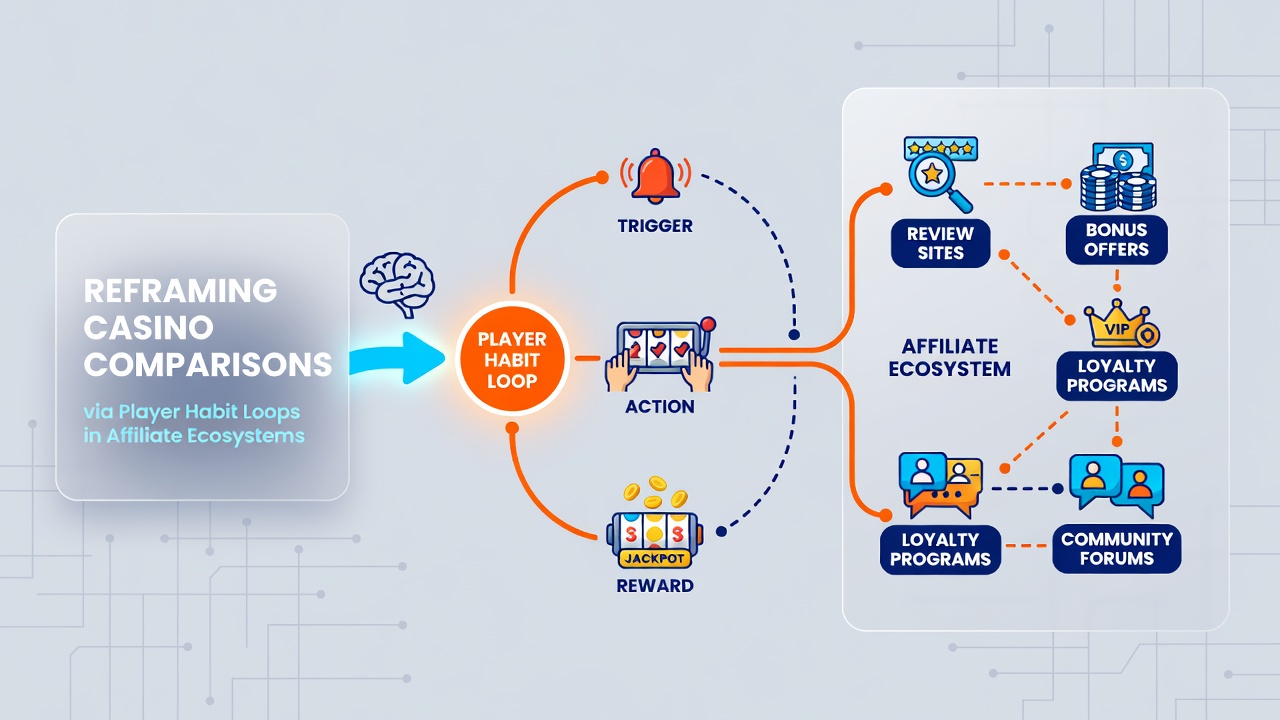
Habit loops shape how players interact with online casinos, and affiliate ecosystems have started adjusting their comparison frameworks around these patterns instead of static feature lists. Researchers studying behavioral sequences describe the loop as a three-part cycle where a cue triggers a routine that delivers a reward, and data from multiple jurisdictions shows this cycle influences session length and repeat visits across regulated markets.
Affiliate platforms collect behavioral signals from user navigation, time spent on review pages, and click-through patterns to map these loops onto casino recommendations. In practice this means comparison tables now sort options according to how well each site supports cue recognition, routine reinforcement, and reward delivery rather than simply ranking by bonus size or game count.
Mapping Habit Components to Casino Evaluation
Observers tracking affiliate content note that cues often appear as targeted landing-page headlines or search-result snippets that prompt a player to begin a session. Routines follow when the platform guides users toward specific game categories or loyalty mechanics that match previous activity, while rewards arrive through cashback structures or level-progression systems. By June 2026 several large affiliate networks had begun publishing updated matrices that score casinos on each loop element using anonymized retention metrics supplied by operators under data-sharing agreements.
Regulatory filings from the Nevada Gaming Control Board and the Malta Gaming Authority both record rising operator investment in habit-tracking dashboards during 2025, with affiliate partners receiving aggregated summaries that highlight which routine-reward pairings sustain longer play intervals. These summaries feed directly into refreshed comparison pages that present casinos in sequences reflecting observed loop strength rather than alphabetical or revenue-based order.
Regional Data Patterns and Affiliate Adjustments
Figures released by the Australian Gambling Research Centre indicate that players who encounter consistent cue-to-reward alignment across devices maintain 18 percent higher monthly active rates than those using mismatched platforms. Affiliate teams in the Asia-Pacific region responded by reordering their top-list displays to surface casinos whose loyalty programs echo the same cue-routine-reward sequence identified in regional telemetry. Similar adjustments appear in North American directories, where state-level compliance reports show increased emphasis on responsible-play prompts placed at reward-delivery points within the loop.
One documented case involved an affiliate network that cross-referenced six months of clickstream data with operator-provided retention files, revealing that players who received reward notifications within four minutes of routine completion converted to higher-tier loyalty status at twice the baseline rate. The network subsequently revised its comparison algorithm to prioritize casinos meeting this timing threshold, and the change coincided with a measurable lift in downstream operator sign-ups tracked through affiliate dashboards.
Technical Implementation in Comparison Tools
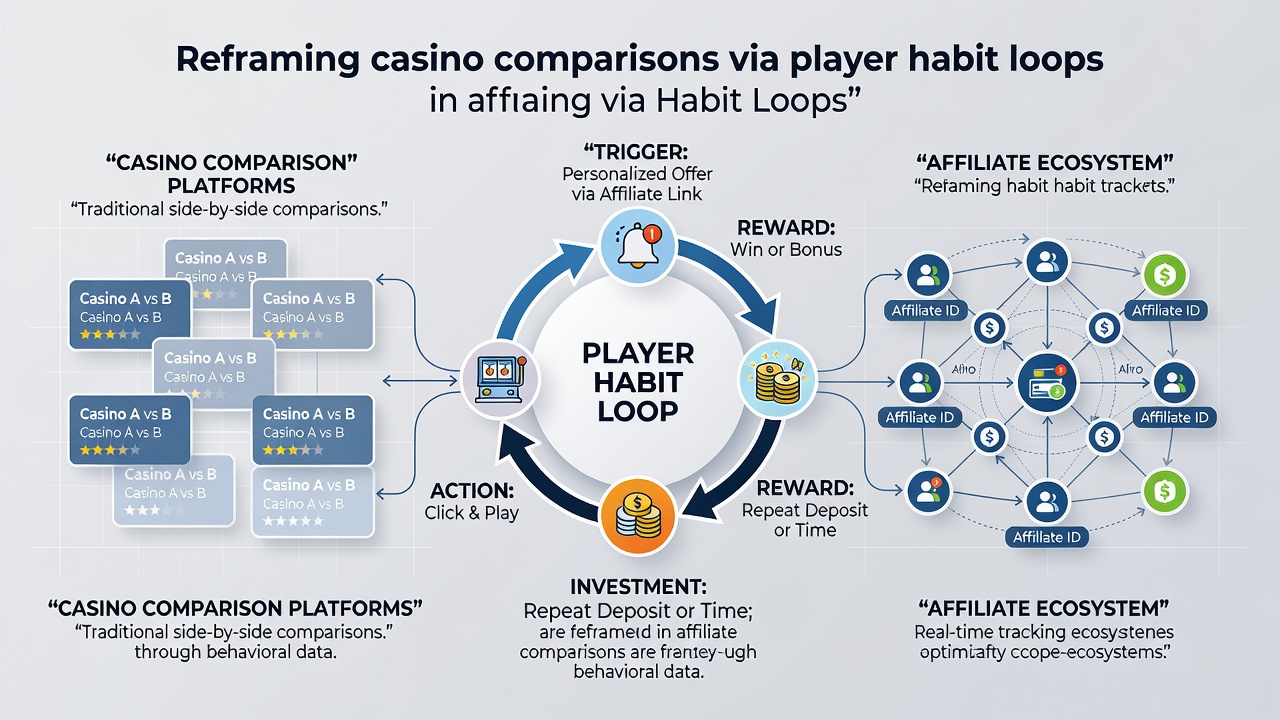
Developers building affiliate sites now embed lightweight scripts that detect user entry points and surface loop-aligned suggestions without storing personally identifiable information. These scripts reference hashed session identifiers to determine whether a visitor arrived via a cue-matching search term, then adjust visible casino tiles to emphasize routine-supporting features such as quick-deposit flows or one-click game launch. Reward elements appear lower in the comparison once the routine phase is confirmed through scroll depth or interaction heatmaps.
Industry reports compiled by the European Gaming and Betting Association document that operators supplying loop-performance data to affiliates experienced a 12 percent average increase in qualified traffic volume during the first half of 2026. The same reports note that affiliates employing these segmented displays reduced bounce rates on comparison pages by aligning content order with the predominant habit sequence observed in each traffic source.
Future Tracking and Compliance Considerations
Regulators in multiple jurisdictions continue to require clear separation between promotional content and responsible-gaming messaging, and habit-loop integrations must respect these boundaries. Affiliates therefore place limit-setting tools and session-time indicators at reward-delivery moments rather than at the cue stage, preserving the loop while satisfying disclosure rules. Data from the Alcohol and Gaming Commission of Ontario shows that sites adopting this placement approach maintained compliance scores above 95 percent in quarterly audits conducted through spring 2026.
Academic researchers at the University of Nevada, Reno have begun longitudinal studies examining whether habit-loop framing in affiliate comparisons correlates with changes in player self-reported satisfaction, with preliminary findings expected in late 2026. Until those results appear, affiliate networks rely on operational metrics such as time-to-first-deposit and 30-day retention to validate their reordered comparison structures.
Conclusion
Affiliate ecosystems continue to refine casino comparisons by anchoring rankings to documented player habit loops, drawing on aggregated behavioral data from operators and regulators across several continents. The approach reorganizes traditional evaluation criteria around cue recognition, routine execution, and reward timing, producing comparison layouts that reflect observed retention patterns rather than isolated promotional attributes. As June 2026 data sets circulate through industry channels, further adjustments to these frameworks remain likely, driven by ongoing telemetry and compliance requirements rather than static ranking formulas.