Synchronizing Visual Storytelling Layers With Player Decision Pathways in Gambling Aggregators
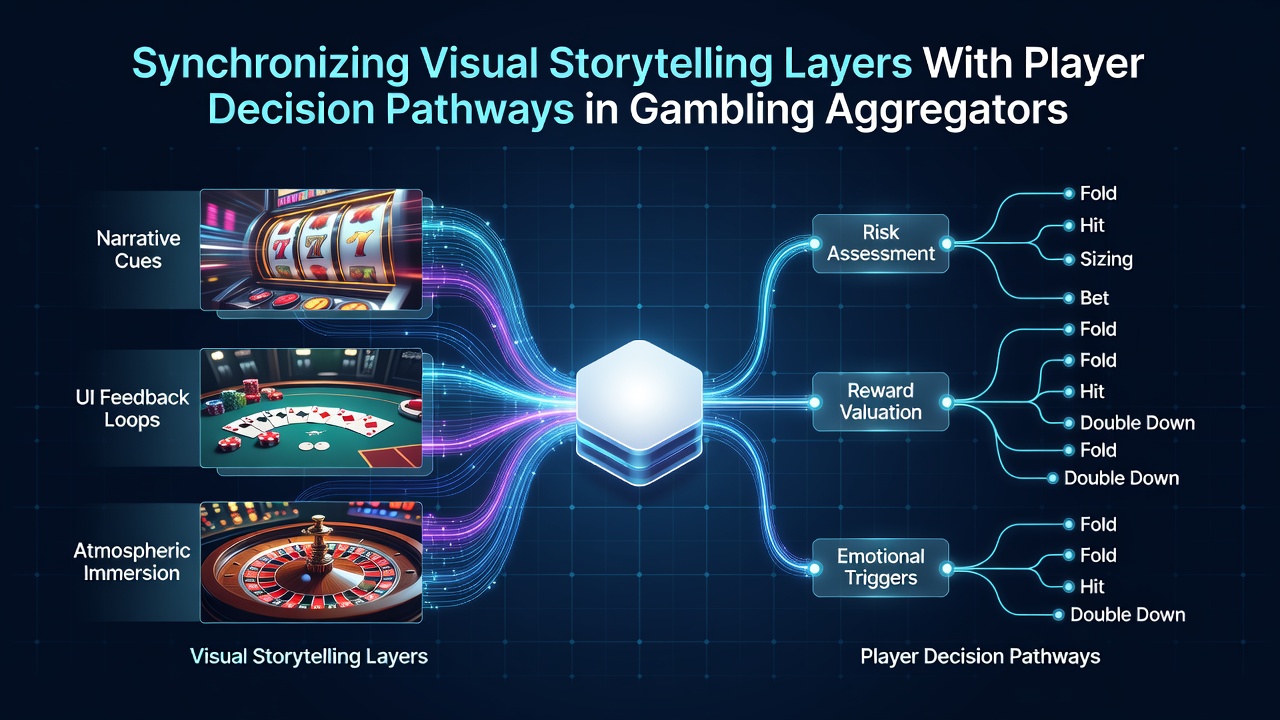
Gambling aggregators function as centralized platforms that compile games from multiple providers into unified interfaces, and synchronization between visual storytelling layers and player decision pathways represents a core technical process in these systems. Visual storytelling layers consist of narrative elements such as animated backgrounds, character progressions, and thematic sequences that unfold during gameplay, while player decision pathways encompass sequences of choices including bet selections, feature activations, and game switches that users make in real time.
Core Components of Visual Layers in Aggregators
These layers operate through modular rendering engines that pull assets from various studios and align them with backend data streams. Researchers have documented how aggregators employ real-time graphics pipelines to adjust story elements based on incoming user inputs, which allows scenes to evolve without disrupting session flow. For instance, a slot game aggregator might shift environmental visuals from daytime to night settings when a player increases stake levels or unlocks bonus rounds, and such adjustments rely on predefined trigger mappings that connect decision data points to visual outputs.
Industry reports indicate that major aggregators process thousands of concurrent sessions where these alignments occur within milliseconds, and synchronization protocols use event-driven architectures to handle the data exchange. Data from regulatory filings shows that platforms operating across multiple jurisdictions maintain compliance logs that track these interactions, which ensures visual changes do not conflict with game fairness standards enforced by bodies such as the Nevada Gaming Control Board.
Mapping Decision Pathways to Narrative Elements
Player decision pathways follow branching structures that aggregators model through decision trees and state machines. When a user selects a particular game variant or adjusts wager parameters, the system routes these signals to corresponding visual modules that advance or alter the story layer accordingly. Observers note that this mapping often incorporates conditional logic where prior choices influence subsequent visuals, which creates continuity across extended play sessions.
In July 2026 several aggregator providers updated their synchronization frameworks to incorporate more granular pathway tracking, and these enhancements enabled finer control over how narrative branches responded to sequential decisions. Technical documentation from platform operators reveals that such updates reduced latency in visual transitions by integrating edge computing nodes closer to user regions, which supported smoother delivery for global audiences.
Technical Synchronization Methods
Aggregators achieve synchronization through application programming interfaces that bridge frontend rendering with backend analytics engines. These interfaces transmit decision events as structured data packets that trigger specific visual asset loads, and middleware layers handle the translation between pathway states and storytelling sequences. Studies from gaming technology conferences have outlined how machine learning models predict likely decision branches in advance, which allows preloading of relevant visual layers to minimize delays during live play.
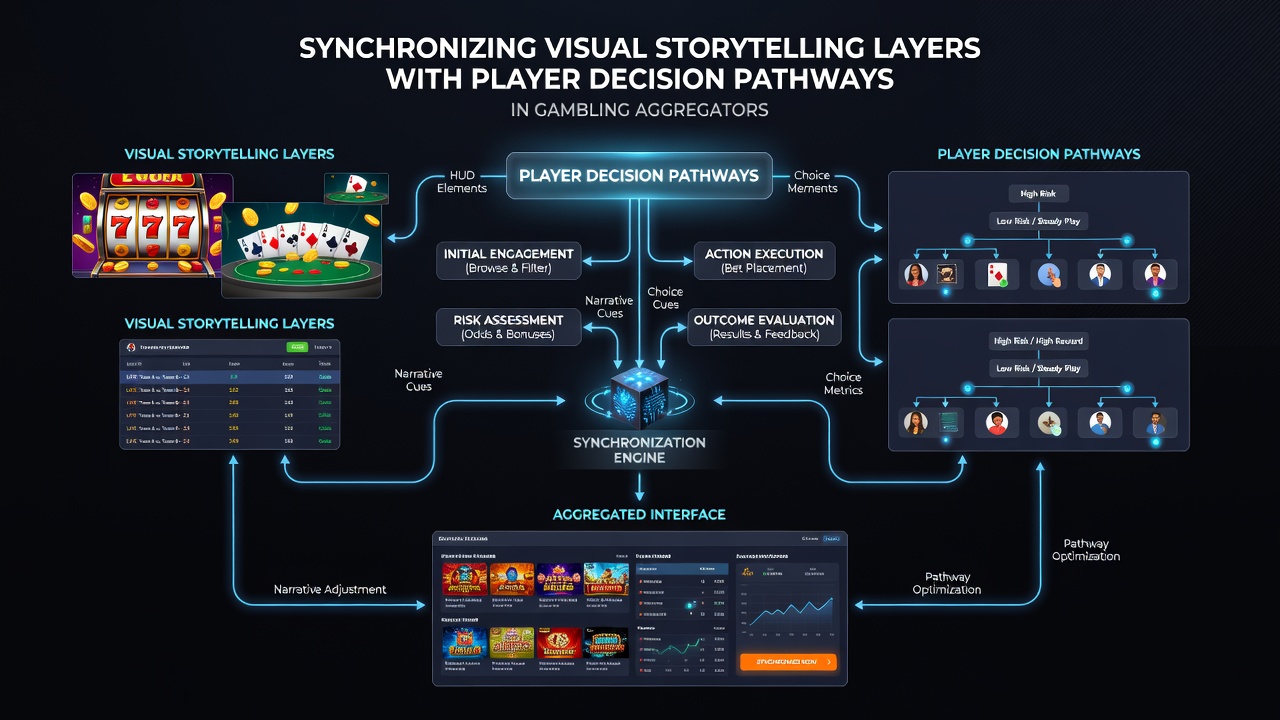
One documented approach involves timestamped event logging where each decision receives a unique identifier that links directly to visual state changes, and this method supports audit trails required by oversight agencies. Figures from European regulatory summaries demonstrate that synchronized systems maintain session integrity across aggregated content pools, which reduces discrepancies that could arise when mixing games from disparate developers.
Implementation Across Platform Types
Mobile and desktop aggregator interfaces apply these synchronization techniques differently based on device capabilities. Mobile versions prioritize lighter visual layers that adapt quickly to touch-based decisions, whereas desktop setups support higher-resolution storytelling elements that respond to mouse or keyboard pathways. Those who have analyzed platform architectures report that cross-device consistency depends on centralized content delivery networks that push synchronized updates uniformly regardless of access point.
Examples from operational platforms show how decision pathways involving progressive jackpots trigger escalating visual narratives, such as character development arcs that intensify with accumulated stakes. These implementations draw from aggregated data feeds that monitor pathway frequency and adjust visual intensity parameters accordingly, which maintains engagement without exceeding hardware limits on end-user devices.
Regulatory and Operational Considerations
Regulatory frameworks require that visual changes remain secondary to core game mechanics, and synchronization must preserve randomness and payout transparency. Aggregators address this by isolating storytelling layers from random number generation processes, which ensures narrative adaptations do not influence outcome probabilities. Reports issued by the Australian Gambling Research Centre highlight how compliant platforms document these separations through detailed system architecture reviews conducted at regular intervals.
Operational teams within aggregator companies coordinate with content providers to standardize data schemas for decision events, and this standardization facilitates smoother integration of new visual assets over time. The result appears in session logs where pathway-to-layer mappings undergo periodic validation against performance benchmarks established by industry groups.
Conclusion
Synchronization of visual storytelling layers with player decision pathways continues to evolve as aggregators refine their technical stacks and respond to expanding content libraries. Data indicates that effective implementations rely on precise event mapping, low-latency rendering, and adherence to regulatory separation requirements. Those tracking developments in this area observe ongoing refinements that align visual adaptations more closely with user interaction patterns across diverse platform environments.